TROX MFPCR – Mini Pleat Filter Panels for Clean rooms

Call for Price

For the most demanding requirements on the purity of?indoor air, workstations, and working media

HEPA and ULPA filters as high-efficiency particulate filters for the separation of?suspended particles in cleanroom systems. For use in industrial, research, medical,?pharmaceutical, and nuclear engineering applications.
? Filter classes H13, H14, U15, U16
? Performance data tested in accordance with DIN EN 1822-1 and DIN EN ISO?29463-2 ? DIN EN ISO 29463-5
? Filter classes E11, H13, H14, U15, U16 according to DIN EN 1822
? Filter classes ePM1 and ePM10 according to DIN EN ISO 16890
? Meets the hygiene requirements of VDI 6022
? Filter media made of glass fiber paper with spacers made of thermoplastic hotmelt adhesive, individually customized for specific requirements
? Low initial differential pressure due to ideal pleat position and largest possible?filter area
? Perfect adjustment to individual requirements due to variable pleat depths
? Installation options in particulate filter air terminal devices of type TFC, TFW,?TFM, TFP
? Installation options in filter fan units, cleanrooms or in operating room ceilings
? Automatic filter scan test
SKU: MFPCR Category: Tag:

Description

Application

  • Mini Pleat filter panel for the separation of suspended?particles such as aerosols, toxic dusts, viruses, bacteria from the supply and extract air in cleanroom facilities with controlled air cleanliness and airflow.
  • Particulate filter: Final filter for the most critical requirements of air cleanliness and sterility in areas such as production, research, medicine, pharmaceuticals industry, and nuclear engineering, etc.

Special characteristics

  • Optimal pleat geometry of the filter medium
  • Low-turbulence outflow of clean air
  • Leakage test using the scan test as proof of leak-tightness and as assurance for compliance with separation efficiency and pressure loss (standard from H14).

Classification

  • Hygiene Conformity

Nominal sizes

  • B ? H ? T [mm]

Filter groups

  • ePM 10 according to DIN EN ISO 16890
  • ePM 1 according to DIN EN ISO 16890
  • EPA according to DIN EN 1822
  • HEPA according to DIN EN 1822
  • ULPA according to DIN EN 1822

Filter classes

  • ePM10
  • ePM 1
  • E11
  • H13
  • H14
  • U15
  • U16

Options

  • FT: pleat depth
  • CSU: continuous seal on the upstream side
  • CSD: continuous seal on the downstream side
  • CSB: continuous seal on both sides
  • FNU: flat seal on the upstream side
  • FND: flat seal on the downstream side
  • FNB: flat seal on both sides
  • GPU: Fluid seal (only for ALV, ALU, ALQ, ALT, ALH)
  • TGU: test groove seal on the upstream side (only for filter classes H13, H14)
  • PU: protection grid on the upstream side
  • PD: protection grid on the downstream side
  • PB: protection grid on both sides
  • OT: oil mist test (only for filter classes H13, H14)
  • OTC: oil mist test with certificate (only for filter classes H13, H14)
  • ST: Scan test
  • LFU: full-surface laminar fleece on the upstream side
  • LFD: full-surface laminar fleece on the downstream side
  • LFS: laminar fleece strips

Construction

Frame versions made from extruded aluminum section

List of frame depths according to construction:

Profiles with groove for continuous seal:

  • ALD: 66 mm
  • ALB: 69 mm
  • ALC: 78 mm
  • ALG: 90 mm
  • ALJ: 115 mm

Profiles for continuous seal/flat seal

  • ALN: 30 mm
  • ALZ: 78 mm
  • ALY: 150 mm

Profiles for fluid seal

  • ALV: 85 mm
  • ALU: 91 mm
  • ALQ: 105 mm
  • ALT: 130 mm
  • ALH: 130 mm

Profiles with knife edge profile

  • ALL: 94 mm
  • ALS: 105 mm
  • ALR: 109 mm
  • ALX: 134 mm

Material and surfaces

  • Filter media made of high-quality, wet-strength glass fibre?papers, pleated
  • Spacers made of thermoplastic hot-melt adhesive provide a uniform spacing of the pleats
  • Joint sealing compound made of permanently elastic twocomponent polyurethane adhesive
  • Frame made from extruded aluminium sections

Standards and guidelines

  • Testing of particulate filters according to DIN EN 1822-1?and DIN EN ISO 29463-2 ? DIN EN ISO 29463-5 (EPA, EPA, and ULPA particulate filters): Standards for testing filtration performance at the manufacturing plant, based on particle counting methods using a liquid test aerosol.
  • Testing in accordance with DIN EN ISO 16890; international standard: air filters for general ventilation. Classification of fractional efficiency based on the measured fractional efficiency which is processed into a reporting system for the particulate matter efficiency (ePM)
  • For fine dust filters, the fractional efficiency of a certain size range is determined by aerosols (DEHS and KCl)
  • Depending on the test values, the filters are classified into the filter groups ISO ePM10 and ISO ePM1
  • Uniform classification of particulate filters according to separation efficiency, using a test aerosol with an average particle size within the minimum separation efficiency (MPPS)
  • Particulate filters are classified, according to the values determined for the local separation efficiency and the overall separation efficiency, into EPA (filter classes E10, E11, E12), HEPA (filter classes H13, H14) or ULPA (filter classes U15, U16, U17)
  • Hygiene compliance: VDI 6022, VDI 3803, DIN 1946 Part 4, ?NORM H 6021 and ?NORM H 6020, SWKI VA 104-01 and SWKI 99-3, and EN 16798

Technical information

* With a pleat depth of 20 mm, the upstream velocity is 0.45 m/s.

Depending on the filter class and the pleat depth, the initial pressure differential [Pa] is determined.

The nominal volume flow is the product of the associated upstream velocity and upstream face area of the filter (B ? H), minus the profile thickness. See chapter Quick sizing.

Order Code:
MFPCR ? H14 ? ? ALC ? R / 1220 x 610 x 78 x 58 / PD / CSD ? 11 ? / ST / LFD
| | | | | | | | | | | | |
1 2 3 4 5 6 7 8 9 10 11 12 13
1 Type

MFPCR?Mini Pleat filter panel for clean room technology

2 Filter class
ePM1?Fractional efficiency ePM1 according to ISO 16890
ePM10?Fractional efficiency ePM10 according to ISO 16890
E11?Filter class E11 according to DIN EN 1822
H13?Filter class H13 according to DIN EN 1822
H14?Filter class H14 according to DIN EN 1822
U15?Filter class U15 according to DIN EN 1822
U16?Filter class U16 according to DIN EN 1822
3 Separation efficiency
Only with filter class ePM1, ePM10
Specify separation efficiency [%] according to ISO 16890
4 Construction
Extruded aluminium section
ALN?smooth frame for flat seal (depth 30 mm)
ALZ?smooth frame for flat seal (depth 78 mm)
ALY?smooth frame for flat seal (depth 150 mm)
ALD?Frame with groove for foamed seal (depth 66 mm)
ALB?Frame with groove for foamed seal (depth 69 mm)
ALC?Frame with groove for foamed seal (depth 78 mm)
ALG?Frame with groove for foamed seal (depth 90 mm)
ALV?Frame with U-profile for fluid seal (depth 85 mm)
ALU?Frame with U-profile for fluid seal (depth 91 mm)
ALQ?Frame with U-profile for fluid seal (depth 105 mm)
ALT?Frame with U-profile for fluid seal (depth 130 mm)
ALL?Frame with knife edge profile (depth 94 mm)
ALS?Frame with knife edge profile (depth 105 mm)
ALR?Frame with knife edge profile (depth 109 mm)
ALX?Frame with knife edge profile (depth 134 mm)
5 Section upstream side
No entry: Standard
R?reverse execution (not with ALV, ALU, ALQ variant)
6 Nominal size [mm]
Specify width ? height ? depth
7 Pleat depth [mm]
Specify pleat depth
8 Protection grid
No entry: without protection grid
PU?Protection grid on the upstream side
PD?Protection grid on the downstream side
PB?Protection grid on both sides
9 Seal
WS?without seal
FNU?Flat seal on the upstream side
FND?Flat seal on the downstream side
FNB?Flat seal on both sides
TGU?Test groove seal on the upstream side
CSU?Continuous seal on the upstream side
CSD?Continuous seal on the downstream side
CSB?Continuous seal on both sides
GPU?Fluid seal (only with ALV, ALU, ALQ, ALT version)
10 Seal type upstream side
Only with seal FNU, FNB, TGU, CSU, CSB, GPU
Specify seal type
11 Seal type downstream side
Only with seal FND, FNB, CSD, CSB
Specify seal type
12 Testing
No entry: no leakage test
OT?Oil mist test (filter classes H13 and H14 only)
OTC?Oil mist test with certificate (filter classes H13 and H14
only)
ST?Scan test (filter classes H13, H14, U15, U16 only)
13 Laminar distribution fleece
No entry: none
LFU?full-surface laminar fleece, upstream side
LFD?full-surface laminar fleece, downstream side
LFS?laminar fleece strips

Order example: MFPCR-H14-ALC-R/1220?610?78?58/PD/CSD-11/ST/LFD

Type MFPCR – Mini Pleat filter panel for clean room technology
Filter class Filter class H14 according to DIN EN 1822
Seperation efficiency
Construction Frame with groove for foamed seal (depth 78 mm)
Section upstream side reverse execution
Nominal size [mm] Width 1220, height 610, depth 78
Pleat depth [mm] 58
Protection grid Protection grid on the downstream side
Seal Continuous seal on the downstream side
Seal type upstream side
Seal type downstream side Continuous seal foamed in groove
Testing Scan test
Laminar distribution fleece full-surface laminar fleece, downstream side

Literature

General Information

Application

  • Mini Pleat filter panel for the separation of suspended particles such as aerosols, toxic dusts, viruses, bacteria from the supply and extract air in cleanroom facilities with controlled air cleanliness and airflow.
  • Particulate filter: Final filter for the most critical requirements of air cleanliness and sterility in areas such as production, research, medicine, pharmaceuticals industry, and nuclear engineering, etc.

Special characteristics

  • Optimal pleat geometry of the filter medium
  • Low-turbulence outflow of clean air
  • Leakage test using the scan test as proof of leak-tightness and as assurance for compliance with separation efficiency and pressure loss (standard from H14).


Classification

  • Hygiene Conformity

Nominal sizes

  • B × H × T [in]

Filter classes
Filter groups

  • ePM 10 according to DIN EN ISO 16890
  • ePM 1 according to DIN EN ISO 16890
  • EPA according to DIN EN 1822
  • HEPA according to DIN EN 1822
  • ULPA according to DIN EN 1822

Filter classes

ePM10

ePM 1
E11

H13

H14

U15

U16

Options

  • FT: pleat depth
  • CSU: continuous seal on the upstream side
  • CSD: continuous seal on the downstream side
  • CSB: continuous seal on both sides
  • FNU: flat seal on the upstream side
  • FND: flat seal on the downstream side
  • FNB: flat seal on both sides
  • GPU: Fluid seal (only for ALV, ALU, ALQ, ALT, ALH)
  • TGU: test groove seal on the upstream side (only for filter classes H13, H14)
  • PU: protection grid on the upstream side
  • PD: protection grid on the downstream side
  • PB: protection grid on both sides
  • OT: oil mist test (only for filter classes H13, H14)
  • OTC: oil mist test with certificate (only for filter classes H13, H14)
  • ST: Scan test
  • LFU: full-surface laminar fleece on the upstream side
  • LFD: full-surface laminar fleece on the downstream side
  • LFS: laminar fleece strips


Construction

Frame versions made from extruded aluminium section

List of frame depths according to construction:

Profiles with groove for continuous seal:

  • ALD: 2.6 in
  • ALB: 2.75 in
  • ALC: 3.1 in
  • ALG: 3.6 in
  • ALJ: 4.5 in

Profiles for continuous seal/flat seal

  • ALN: 1.2 in
  • ALZ: 3.6 in
  • ALY: 5.9 in

Profiles for fluid seal

  • ALV: 3.4 in
  • ALU: 3.6 in
  • ALQ: 4.1 in
  • ALT: 5.1 in
  • ALH: 5.1 in

Profiles with knife edge profile

  • ALL: 3.7 in
  • ALS: 4.1 in
  • ALR: 4.3 in
  • ALX: 5.25 in


Material and surfaces

  • Filter media made of high-quality, wet-strength glass fibre papers, pleated
  • Spacers made of thermoplastic hot-melt adhesive provide a uniform spacing of the pleats
  • Joint sealing compound made of permanently elastic twocomponent polyurethane adhesive
  • Frame made from extruded aluminium sections


Standards and guidelines

  • Testing of particulate filters according to DIN EN 1822-1 and DIN EN ISO 29463-2 – DIN EN ISO 29463-5 (EPA, EPA, and ULPA particulate filters): Standards for testing filtration performance at the manufacturing plant, based on particle counting methods using a liquid test aerosol.
  • Testing in accordance with DIN EN ISO 16890; international standard: air filters for general ventilation. Classification of fractional efficiency based on the measured fractional efficiency which is processed into a reporting system for the particulate matter efficiency (ePM)
  • For fine dust filters, the fractional efficiency of a certain size range is determined by aerosols (DEHS and KCl)
  • Depending on the test values, the filters are classified into the filter groups ISO ePM10 and ISO ePM1
  • Uniform classification of particulate filters according to separation efficiency, using a test aerosol with an average particle size within the minimum separation efficiency (MPPS)
  • Particulate filters are classified, according to the values determined for the local separation efficiency and the overall separation efficiency, into EPA (filter classes E10, E11, E12), HEPA (filter classes H13, H14) or ULPA (filter classes U15, U16, U17)
  • Hygiene compliance: VDI 6022, VDI 3803, DIN 1946 Part 4, ÖNORM H 6021 and ÖNORM H 6020, SWKI VA 104-01 and SWKI 99-3, and EN 16798

Specification Text

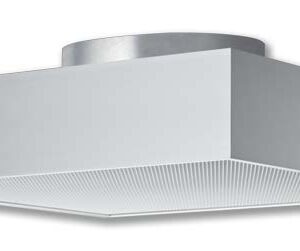
This specification text describes the general properties of the product. Texts for variants can be generated with our Easy Product Finder design programme.


Specification text

Mini Pleat filter panels MFPCR for the separation of suspended particles such as aerosols, toxic dusts, viruses and bacteria from the supply and extract air in clean room systems with controlled air cleanliness and airflow. Use as particulate filters, i.e. main or final filters, for the most critical requirements of air cleanliness and sterility in areas such as production, research, medicine, pharmaceuticals industry, and nuclear engineering. Mini Pleat filter panels for clean room technology, consisting of an extruded aluminium frame, filter media of high-quality, moisture-resistant glass fibre papers with spacers made of thermoplastic hot-melt adhesive. Variable pleat depths enable optimal adjustment to individual requirements. Cleanroom technology available in standard and special sizes, filter groups ISO ePM10, ISO ePM2.5, ISO ePM1 (fine dust filter) and EPA, HEPA, ULPA (particulate filter). As standard, mini pleat filter panels for cleanroom technology are equipped with a continuous seal or fluid seal on the upstream side, depending on the version. Optional designs are available with a seal on the downstream side, on both sides, or with protection grid (arrangement as needed), and with full-surface laminar fleece or laminar fleece strips. Mini pleat filter panels for cleanroom technology are tested as standard from filter class H14 using the automatic scan test.

Special features

  • Optimal pleat geometry of the filter medium
  • Low-turbulence outflow of clean air
  • Leakage test using the scan test as proof of leak-tightness and as assurance for compliance with separation efficiency and pressure loss


Materials and surfaces

  • Filter media made of high-quality, wet-strength glass fibre papers, pleated
  • Spacers made of thermoplastic hot-melt adhesive provide a uniform spacing of the pleats
  • Joint sealing compound made of permanently elastic twocomponent polyurethane adhesive
  • Frame made from extruded aluminium section


Construction

Frame versions made from extruded aluminium section

List of frame depths according to construction:

Profiles with groove for continuous seal:

  • ALD: 2.6 in
  • ALB: 2.75 in
  • ALC: 3.1 in
  • ALG: 3.6 in
  • ALJ: 4.5 in

Profiles for continuous seal/flat seal

  • ALN: 1.2 in
  • ALZ: 3.6 in
  • ALY: 5.9 in

Profiles for fluid seal

  • ALV: 3.4 in
  • ALU: 3.6 in
  • ALQ: 4.1 in
  • ALT: 5.1 in
  • ALH: 5.1 in

Profiles with knife edge profile

  • ALL: 3.7 in
  • ALS: 4.1 in
  • ALR: 4.3 in
  • ALX: 5.25 in

Downloads

MFPCR Mini Pleat Filters Product Data Sheet

MFPCR Declaration of Hygiene Conformity

MFPCR Environmental Product Declaration

MFPCR Non-CE Manufacturer’s Statement

MFPCR Qualification Certificate

MFPCR Installation and Maintenance Manual