General Information
Application
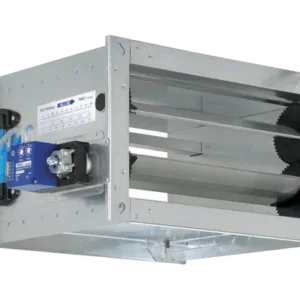
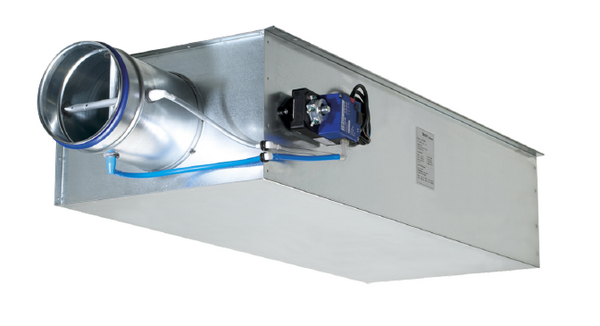
- Rectangular VAV terminal units for use in ventilation and air conditioning systems
- For controlling, restricting or shutting off the supply air flow in systems with high acoustic requirements
- Integral attenuator
- Closed-loop volume flow control using an external power supply
- For variable or constant volume flow systems
- Shut-off by means of switching (by others)
- Can also be used for duct or room pressure control with suitable control components
Special characteristics
- Integral attenuator with at least 26 dB insertion loss at 250 Hz
- Hygiene tested and certified
- Factory set-up or programming and aerodynamic function testing
- Parameters can also later be set on the control component; additional adjustment device may be necessary
- Inspection access according to VDI 6022
Nominal sizes
- 5, 6, 8, 10, 12, 16
Variants
- TVZ: Supply air unit
- TVZ-D: Supply air unit with acoustic cladding
- Units with acoustic cladding and/or secondary silencer Type TS for very demanding acoustic requirements
- Acoustic cladding cannot be retrofitted
Parts and characteristics
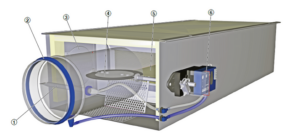
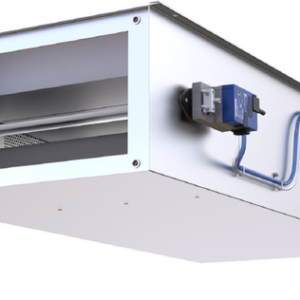
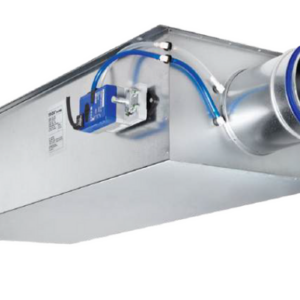
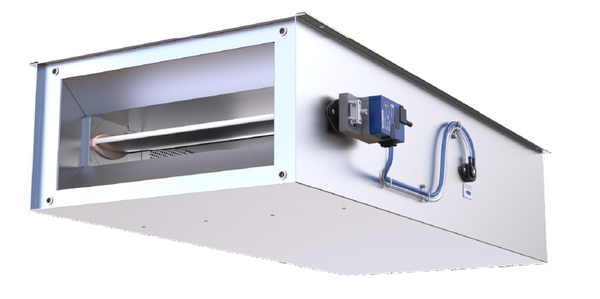
- Ready-to-commission unit which consists of mechanical parts and control components.
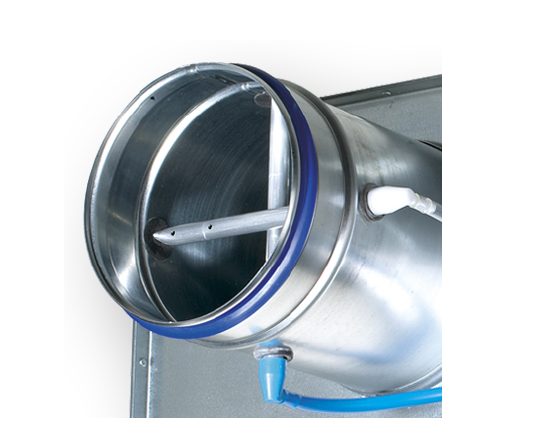
- Averaging effective pressure sensor for volume flow rate measurement
- Damper blade
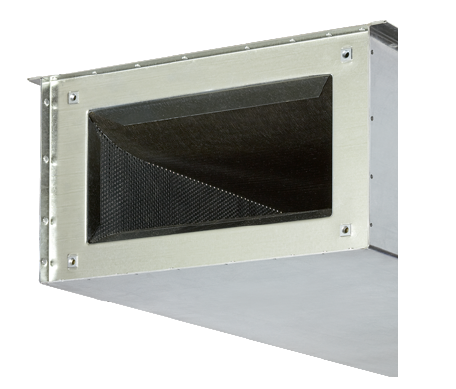
- Integral attenuator
- Inspection access
- Factory assembled control components complete with wiring and tubing
- Aerodynamic functional testing on a special test rig before shipping of each unit
- Set-up data is given on a label or volume flow rate scale affixed to the unit
- High control accuracy (even with upstream bend R = 1D)
Attachments
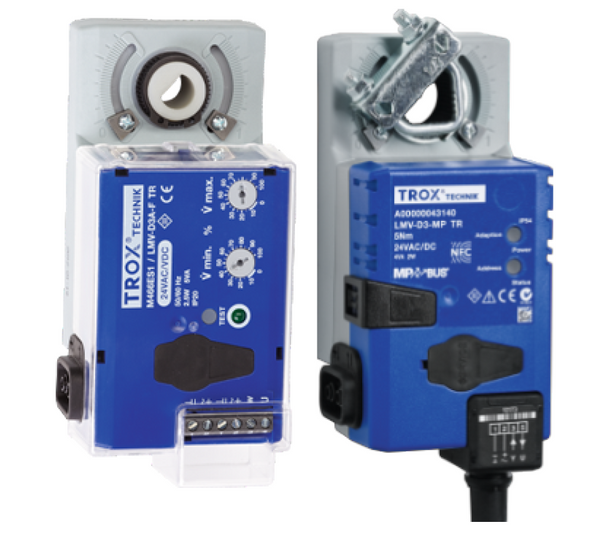
- EASY controller: Compact unit consisting of controller with potentiometers, effective pressure transducer and actuator
- Compact controller: Compact unit consisting of controller with potentiometers, effective pressure transducer and actuator
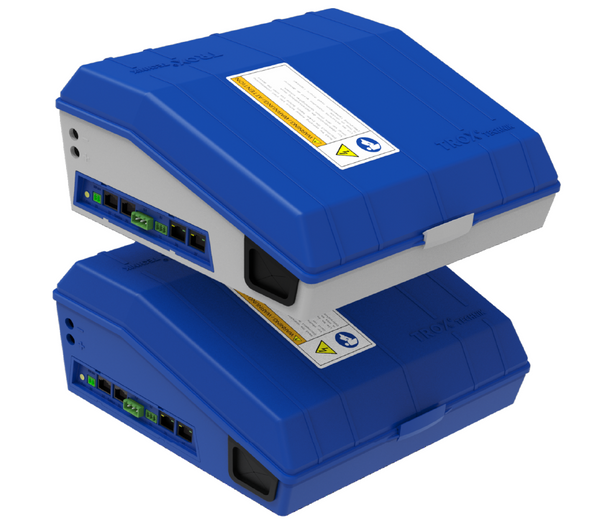
- Universal controller: Controller, effective pressure transducer and actuators for special applications
- LABCONTROL: Control components for air management systems
Accessories
- Double lip seal (factory fitted)
Useful additions
- Secondary silencer Type TS
- Heat exchanger Type WT
Construction features
- Rectangular casing
- Spigot on the fan end suitable for circular ducts to EN 1506 or EN 13180
- Spigot with groove for double lip seal
- Connection on the room end suitable for ducts
- Baffle plate, downstream of the damper blade, for achieving the best possible acoustic and aerodynamic performance
- Position of the damper blade indicated externally at shaft extension
- Thermal and acoustic insulation (lining)
Material and surfaces
- Casing and damper blade made of galvanised sheet steel
- Damper blade seal made of TPE plastic
- Lining made of mineral wool
- Differential pressure sensor made of aluminium
- Plastic plain bearings
- Shaft and linkage: galvanised steel
Variant with acoustic cladding (-D)
- Acoustic cladding made of galvanised sheet steel
- Lining made of mineral wool
- Insulation of structure-borne noise made of rubber elements
Mineral wool
- According to EN 13501, fire rating class A1, non-flammable
- RAL quality mark RAL-GZ 388
- Non-hazardous to health due to high biosolubility according to the German Hazardous Substance Ordinance and Note Q of European Regulation (EC) No. 1272/2008
- Faced with glass fibre fabric as a protection against erosion from airflow velocities of up to 3937 fpm
- Inert to fungal and bacterial growth
Standards and guidelines
Meets the hygiene requirements of
- EN 16798, Part 3
- VDI 6022, Sheet 1
- DIN 1946, Part 4
- For further standards and guidelines, please refer to the hygiene certificate
Casing air leakage:
Nominal sizes 5 – 8
- EN 1751, Class C
Nominal sizes 10 – 16
- EN 1751, Class B
Closed damper blade leakage airflow:
Nominal sizes 5 – 6
- EN 1751, Class 3
- Meets the general requirements of DIN 1946, part 4, with regard to the acceptable closed damper blade leakage airflow
Nominal sizes 8 – 16
- EN 1751, Class 4
- Meets the increased requirements of DIN 1946, Part 4, with regard to the acceptable closed damper blade leakage airflow
Maintenance
- Maintenance-free as construction and materials are not subject to wear
Disclosure of Chemicals
RoHS EU Directive 2011/65/EU (RoHS)This product or single variants comply with EU Directive 2011/65/EU (RoHS) on the restriction of the use of certain hazardous substances in electrical and electronic equipment. For more information, please refer to our Environmental Product Declarations.
REACH 1907/2006 (EC Regulation REACH)This product or single variants comply with the provisions of EC Regulation No. 1907/2006, also known as REACH (Registration, Evaluation, Authorisation and Restriction of Chemicals). For more information, please refer to our Environmental Product Declarations.