

General Information
Application
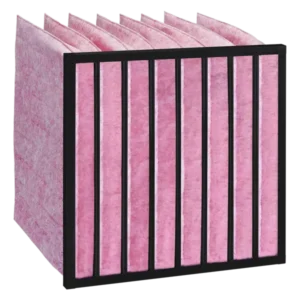
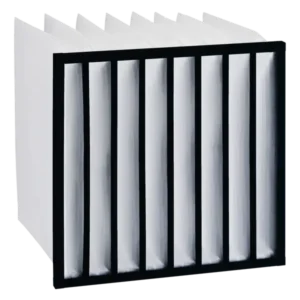
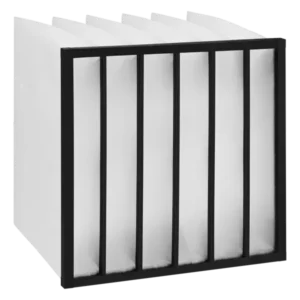
- Pocket filter made of non-woven synthetic fibres for the separation of fine dust
- Fine dust filter: Prefilter or final filter in ventilation systems
Classification
- Eurovent certification for fine dust filters
- Meets the hygiene requirements
Nominal sizes
- B × H × T [in]
Filter classes
Filter groups
- ISO ePM10 to ISO 16890
- ISO ePM1 to ISO 16890
Filter classes
- ePM10 60 %
- ePM10 75 %
- ePM1 60 %
- ePM1 80 %
Construction
- PLA: Frame made of plastic
- GAL: Frame made of galvanised steel
Useful additions
- Filter wall (SIF)
- Universal casing (UCA)
Construction features
- Frame depth of construction PLA: 1 in
- Frame depth of construction GAL: 0.75, 1 in
- Number of pockets: 3, 4, 5, 6, 7, 8
Materials and surfaces
- Filter media made of non-woven synthetic fibres
- Frame made of plastic or galvanised sheet steel
Standards and guidelines
- Test according to ISO 16890; international standard for general room air distribution; classification of arrestance efficiency based on the measured fractional arrestance efficiency, which is processed into a reporting system for the fine dust arrestance efficiency (ePM)
- For fine dust filters, the fractional arrestance efficiency of a certain size range is determined by aerosols (DEHS and KCl)
- The filters are classified into filter groups ISO ePM10, ISO ePM2.5 and ISO ePM1 depending on the tested values
- Construction PLA meets the hygiene requirements of VDI 6022, VDI 3803, DIN 1946 Part 4, ÖNORM H 6021 and ÖNORM H 6020, SWKI VA 104-01 and SWKI 99-3, and EN 16798
Disclosure of Chemicals
- RoHS EU Directive 2011/65/EU (RoHS)
- This product or single variants comply with EU Directive 2011/65/EU (RoHS) on the restriction of the use of certain hazardous substances in electrical and electronic equipment. For more information, please refer to our Environmental Product Declarations.
- REACH 1907/2006 (EC Regulation REACH)
- This product or single variants comply with the provisions of EC Regulation No. 1907/2006, also known as REACH (Registration, Evaluation, Authorisation and Restriction of Chemicals). For more information, please refer to our Environmental Product Declarations.